

PVC and Rubber Modified Blends: Properties, Benefits and Industrial Applications
October 25, 2026
What Is a PVC and Rubber Modified Blend?
PVC and rubber modified blends are polymer materials produced by combining polyvinyl chloride (PVC) with rubber or rubber-based components to modify the properties of conventional PVC. In Chinese, these materials are commonly referred to as 橡塑改性物 or 橡塑改性料, meaning rubber-plastic modified materials or compounds.
PVC is widely used in industrial profiles, seals and protective components because of its processability, chemical resistance and cost-effectiveness. However, conventional PVC formulations may not provide the flexibility, resilience or low-temperature performance required for certain applications. Rubber modification can help adjust these properties, depending on the rubber type, blend ratio, compatibility and formulation.
The resulting material is not a single standardized polymer. Its performance depends on the specific composition and manufacturing process. Therefore, PVC and rubber modified blends should be evaluated according to their intended application rather than treated as one material with fixed properties.
How Does Rubber Modification Change PVC Properties?
The purpose of rubber modification is to balance the processing advantages of PVC with selected properties associated with rubber. Depending on the formulation, the following characteristics may be adjusted.
1. Flexibility and Elasticity
Rubber components can improve the flexibility and deformation behavior of certain PVC compounds. This can be beneficial for profiles that need to bend during installation, accommodate dimensional variations or maintain contact with adjacent surfaces.
The degree of flexibility depends on the type and amount of rubber used, as well as the overall formulation.
2. Impact Resistance
Rubber modification may improve impact resistance and reduce brittleness in appropriately formulated PVC compounds. This can be useful for protective profiles, edge trims and industrial components exposed to occasional knocks or mechanical handling.
The actual improvement should be verified through testing because not every PVC-rubber blend provides the same impact performance.
3. Compression and Recovery Behavior
For sealing applications, the material must deform sufficiently to fill a gap and maintain contact with the mating surface. Certain rubber-modified PVC formulations can offer a useful balance of flexibility and deformation resistance.
However, compression set and long-term recovery are not determined by the material name alone. They depend on the formulation, profile geometry, operating temperature and duration of compression.
4. Processing and Shape Retention
PVC is suitable for extrusion and other established polymer processing methods. A properly formulated PVC-rubber blend may retain useful processing characteristics while providing modified flexibility or mechanical performance.
The balance between flexibility and rigidity is particularly important for extruded sealing profiles, edge protection components and custom industrial sections.
PVC-Rubber Blends vs. Conventional PVC and Rubber
PVC-rubber modified materials occupy a broad range of performance characteristics. They should not automatically be considered equivalent to either conventional PVC or vulcanized rubber.
| Material | General Characteristics | Typical Considerations |
|---|---|---|
| Conventional PVC | Good processability, shape retention and cost-effectiveness | Flexibility and impact resistance depend on formulation; rigid and flexible grades differ significantly |
| PVC-rubber modified blend | Properties can be adjusted through rubber selection and formulation | Performance varies with composition, compatibility and processing |
| Vulcanized rubber | Often provides elastic deformation and recovery | Performance depends on rubber type, cure system and formulation |
There is no universal ranking among these materials. The best choice depends on the required flexibility, sealing force, environmental exposure, durability and manufacturing requirements.
Applications of PVC-Rubber Modified Materials
PVC-rubber modified compounds may be used in applications where conventional PVC requires additional flexibility or modified mechanical properties.
Industrial Sealing Profiles
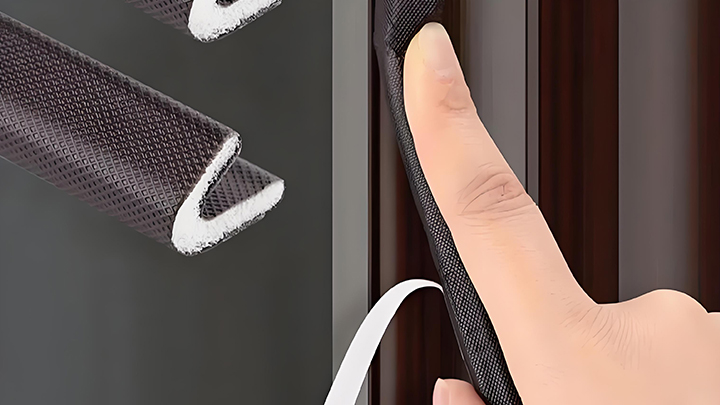
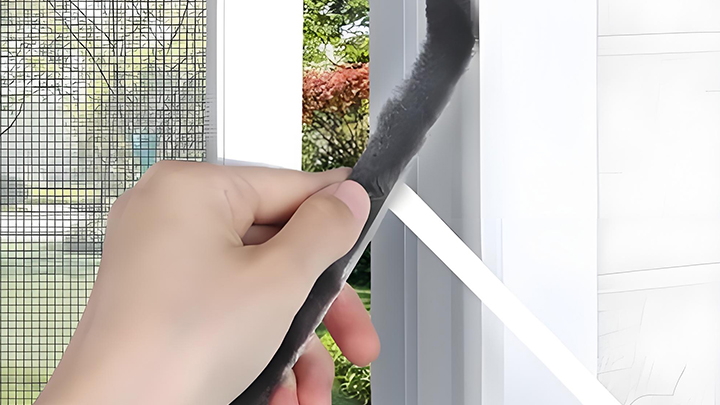
Modified compounds can be considered for extruded sealing profiles used to close gaps, reduce vibration or provide contact between assembled components. The suitability of a particular formulation depends on its compression behavior, dimensional stability and service environment.
Edge Trims and Protective Profiles
Flexible or semi-flexible profiles can be used to cover exposed panel edges, protect corners and improve the fit between adjacent components. The required balance of stiffness and flexibility depends on panel thickness, installation method and profile design.
Equipment and Enclosure Components
Selected formulations may be suitable for protective trims, cushioning components and other non-critical industrial parts used in equipment housings, cabinets and assembled structures.
Custom Extruded Profiles
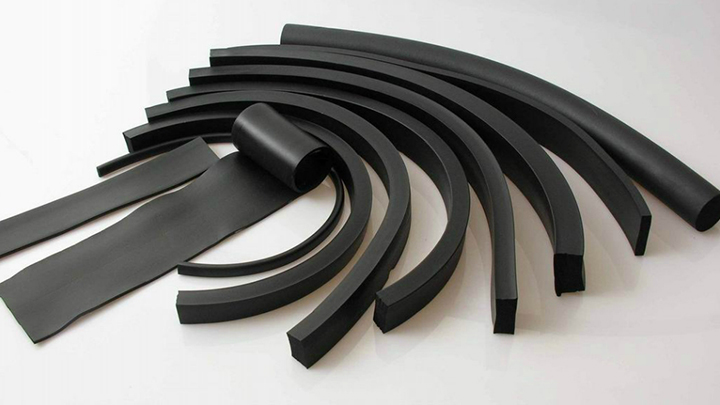
PVC-rubber modified compounds can be evaluated for custom profiles when a project requires a particular combination of flexibility, shape retention and processing characteristics. Material selection should be based on the actual cross-section, installation conditions and expected service life.
What Should You Consider When Selecting a PVC-Rubber Modified Material?
Before choosing a compound for a sealing or extrusion application, consider the following factors:
- Flexibility and hardness: Determine whether the profile needs to bend easily, remain semi-rigid or support a specific contact force.
- Compression and recovery: For sealing applications, assess the required deformation, recovery after compression and long-term compression set.
- Temperature range: Confirm the minimum and maximum service temperatures for the specific formulation.
- Environmental exposure: Consider contact with oils, chemicals, moisture, sunlight and other environmental factors.
- Mechanical requirements: Evaluate tensile strength, elongation, tear resistance and impact resistance where relevant.
- Processing compatibility: Confirm that the compound is suitable for the intended extrusion or molding process.
- Regulatory requirements: Verify any applicable requirements for flame retardancy, electrical applications, food contact or other regulated uses.
These properties should be confirmed using supplier specifications and, where necessary, application-specific testing. The term “PVC-rubber modified material” alone does not establish a particular hardness, temperature rating, chemical resistance or service life.
Is PVC-Rubber Modified Material the Same as TPV or TPE?
Not necessarily.
PVC-rubber modified material is a broad descriptive term for compounds combining PVC with rubber or rubber-based components. TPV (thermoplastic vulcanizate) generally refers to a thermoplastic elastomer system containing dynamically vulcanized rubber within a thermoplastic phase. TPE (thermoplastic elastomer) is a broader category of materials that combine thermoplastic processing characteristics with elastomeric behavior.
These terms describe different material classifications and should not be used interchangeably without confirming the formulation and manufacturing process. A PVC-rubber blend is not automatically a TPV or a TPE simply because rubber and plastic are combined.
When comparing materials, check the actual polymer composition and technical data rather than relying solely on commercial names.
Conclusion
PVC and rubber modified blends provide a way to adjust the properties of PVC-based compounds for applications that require a particular balance of flexibility, mechanical performance and processability. They may be suitable for selected sealing profiles, edge trims, protective components and custom extruded products.
Because formulations can differ substantially, material selection should begin with the functional requirements of the finished component. Hardness, compression recovery, temperature resistance, environmental compatibility and dimensional stability should all be considered before a material is approved for production.
SealsHub supplies sealing strips, rubber profiles, silicone seals and other sealing components for industrial applications. For custom profile projects, defining the required cross-section, installation conditions and material performance helps identify a suitable material and manufacturing approach.